Key takeaways
- Implement S-T-R-E-T-C-H Goals to Increase Customer Retention: Move beyond simple “buy now, get now” rewards by setting elevated targets that encourage long-term participation in your loyalty program. High-value rewards for sustained effort — such as Bella Italia’s 90-day challenge — help shift customer focus from a single transaction to ongoing engagement and higher lifetime value.
- Leverage Gamification to Boost Customer Engagement: Modern loyalty programs use gamification to transform passive buyers into active participants. Interactive challenges, progress tracking, and tier incentives increase customer retention while generating valuable behavioral data for personalization and targeted marketing.
- Use Points to Reduce Churn and Strengthen Loyalty: Accumulated loyalty points act as a psychological anchor. Customers are less likely to switch to a competitor when they have earned rewards within a loyalty program, making points-based systems an effective tool for reducing churn and protecting revenue.
- Optimize the Earn-and-Burn Cycle to Drive Revenue: Loyalty points only create business impact when customers redeem them. Brands that actively manage the earn-and-burn cycle — through expiration reminders or bonus incentives — can reactivate inactive members and turn dormant points into measurable sales growth.
- Prioritize Emotional Loyalty Over Pure Discounts: The most successful loyalty strategies focus on building emotional loyalty through personalized experiences and meaningful rewards. Moving beyond discount-heavy transactions helps brands increase customer lifetime value (CLV) and achieve sustainable revenue growth.
Why loyalty program innovation matters
The unprecedented flexibility of modern loyalty programs puts a world of options at your fingertips, allowing you to experiment and find the right formula for your needs.
That process of discovery helps you gain insights into customer behaviour, learn how to optimise your rewards structure, take advantage of the right opportunities and much more.
Any brand with an active interest in making its loyalty program the best it can be is already doing all of those things but are they really being innovative in how they do it or are they just keeping up with everyone else?
That’s where we want to help and we’re in a unique position to do it. As a loyalty platform that works with clients across industries and markets, we get an inside look at campaign performance and a front-row seat to the implementation of lots of ideas and strategies.
We want to share some of those ideas and inspire you to stand out with effective loyalty outreach based on what has worked for some of our clients. The goal is always to help you go beyond simple transactional loyalty to deeper customer relationships based on the true value that your program delivers.
Get inspired by them to try something new, adapt them to fit your audience or simply use them as a reminder that creativity is key in your approach to setting up a program that works for you!
Use S-T-R-E-T-C-H Goals to Increase Repeat Purchases
Moving customers beyond simple transactional loyalty is a key challenge everywhere. The mentality of “buy this now, get this now” may deliver short-term satisfaction but it rarely generates long-term effects.
That’s why stretch goals can be so effective in modern loyalty programs designed to increase customer retention and repeat purchases. They fundamentally shift a customer's mindset toward long-term, sustained participation instead of instant, small rewards.
Stretch goals are powerful gamification tools in loyalty programs because they encourage members to push past their typical engagement level for a superior, often exclusive, reward. They take the base activity (like purchasing or reviewing) and set an elevated target.
Here are examples of how stretch goals can be effectively integrated into loyalty programs:
Spending-Based Stretch Goals With a Focus on Revenue
These goals encourage customers to increase their average order value or purchase frequency within a specific period.
Behavioural & Engagement Stretch Goals With a Focus on Data
These goals encourage deeper commitment to the brand's ecosystem, often generating valuable data or user-generated content (UGC).
Time-Based & Habitual Stretch Goals With a Focus on Retention
These goals focus on consistency and frequent, low-effort engagement to build long-term habits.
In all these examples, the stretch goal is successful because it offers a reward that is disproportionately valuable compared to the effort, justifying the customer's extra push.
Stretch Goals in the Restaurant Industry
When the reward is definitely worth the effort, customers will respond.
Just ask UK restaurant brand Bella Italia, part of the Big Table Group. They implemented a restaurant loyalty strategy called the “90 Day Challenge” to increase revenue, boost customer retention, and drive repeat visits.
The campaign was strategically designed to move customers beyond a single transactional purchase and into long-term engagement with the brand through a high-value incentive.
At the core of the initiative was a tiered loyalty program built into the Bella Italia mobile app, requiring customers to complete a series of visits within a defined timeframe to unlock the grand reward and strengthen long-term customer loyalty.
The steps and rewards were structured to increase customer commitment with each visit:
The “90 Day Challenge” turned out to be a massive success for Bella Italia, not only in terms of increasing customer visit frequency (up over 30%) and overall spend (up over 10%), but also by driving downloads of their dedicated app to over 150,000 users and counting, creating a powerful platform for ongoing customer engagement, loyalty marketing campaigns, and personalised promotions.
Keep Bella Italia’s recipe for stretch goal success in mind when planning your own loyalty strategy for engaging customers in a way that increases repeat purchases and long-term customer retention.

Key Takeaways:
Stretch goals encourage customers to think beyond the short term and about their future relationship with the brand instead. Instead of focusing on what they could get right now, participants in Bella Italia’s 90-Day Challenge reframed everything in terms of their next visit, strengthening long-term customer engagement and brand loyalty.
Here’s how stretch goals help enhance customer loyalty and improve overall loyalty program performance:
- Steering Away from Transactional Loyalty: While the first two visits offered instant rewards, the main driver was the significant stretch goal of 50% off for 90 days. This incentivised customers to commit to three visits, rather than just one, two, or simply waiting for another one-off voucher, increasing repeat purchases and visit frequency.
- Creating a Habit: The 90-day duration of the grand prize was designed to create a dining habit. By offering a substantial discount for three months, the challenge encouraged customers to incorporate Bella Italia into their regular dining rotation, making it their default choice for casual meals during that period.
- Increased Lifetime Value (LTV): By encouraging frequent, high-spend visits over a three-month window, Bella Italia was able to significantly increase the customer's short-term LTV and establish a strong foundation for long-term loyalty after the promotion ended, driving measurable revenue growth.
In the end, the “90 Day Challenge” helped Bella Italia address a common business problem in the restaurant industry — customer visit frequency — while also demonstrating the impact of a well-designed restaurant loyalty strategy. It’s a great example of what bold thinking and a flexible, feature-rich loyalty platform can do.
How Gamification Increases Customer Participation
Let’s take a step back from stretch goals to look at gamification more generally and the role it continues to play in transforming traditional loyalty programs into modern, data-driven customer engagement experiences that today’s consumers expect.
The days of simply offering a "Buy 5, Get 1 Free!" card are fading fast, if they’re not gone already. The digital landscape has enabled enormous opportunities to introduce an element of gamification to loyalty experiences, replacing simple, uninspired transactions with engaging journeys that increase customer participation and strengthen brand loyalty. Now you can turn formerly passive customers into active participants in brand advocacy.
Finding the right way to incorporate gamification into your loyalty outreach may take some experimentation but one thing is already settled — any loyalty program that doesn’t have it is not going to perform as well as those with it.
What Is Gamification In Loyalty Programs?
Let’s specify what we have in mind here since you might have your own impression of what “gamification” means.
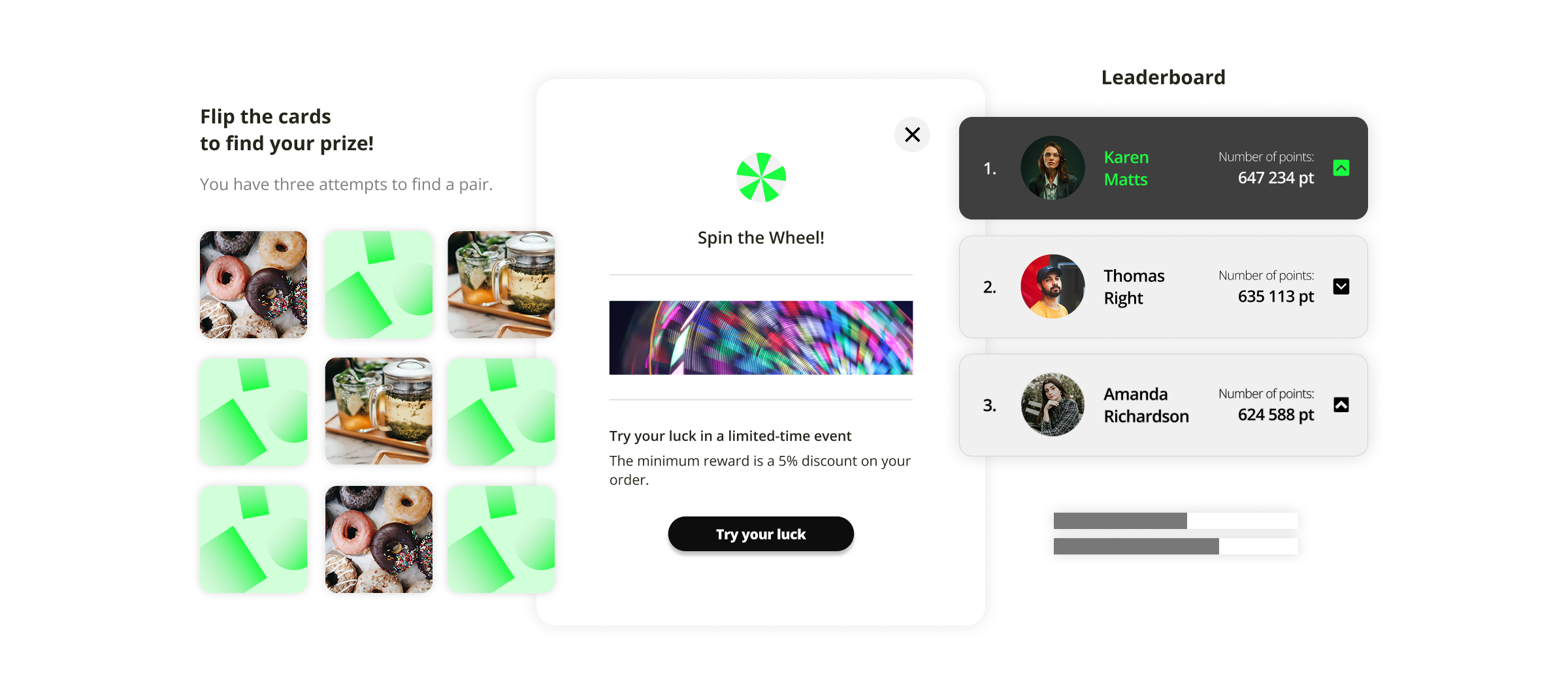
In the context of loyalty programs, gamification involves adding game-design elements or competitive principles to spark and maintain customer interest and increase long-term engagement. You’re probably familiar with the use of elements such as points, badges, levels, leaderboards, and challenges to create an immersive and motivating experience that rewards participants and inspires them to remain engaged and build on what they’ve accomplished so far within a rewards program or loyalty strategy.
Think about the psychological drivers that respond to gamified interactions — the desire for achievement, recognition, status, and the allure of competition. These mechanisms strengthen customer engagement, brand loyalty, and retention, making interactions with a brand feel less like a transactional exchange and more like a rewarding, ongoing experience.
Gamification can motivate customers to take action in two key areas:
The smart use of gamification is a must-have differentiator that engages, rewards and retains customer attention.
Gamification Strategies in Hospitality Marketing
Who doesn’t love to “spin to win”? That was the idea behind an effective gamification strategy from FrogPubs, a network of UK-themed establishments in France.
New members to their loyalty program could sign up and get a “mystery spin”, with content updated and customised for various promotions.

Using their point of sale data and running a data script over it based on visit time and items purchased allowed FrogPubs to place these new customers in dynamic segments for better personalisation. These groups included Business (Monday to Friday 12.00-14.00), Leisure (Evening and weekends), Football (being present in the pub when certain key sports games were on) and Family (buying kids meals).
From there, it was easy to craft customised messaging for everyone, with tailored offers most likely to connect with the needs and interests of these different customer segments, strengthening overall customer retention and loyalty marketing efforts.
This is a great example of potentially turning one-time visitors into regular customers and dealing with the challenge of client anonymity in the hospitality industry through smarter customer data utilisation and retention strategy.
The Advantages of Gamification In Loyalty Programs
Let’s get down to the details of the specific ways gamification elements in a loyalty program translate into business benefits and measurable performance metrics and ROI impact:
- Increased Customer Engagement: Transforms passive earning into an active pursuit, making interactions with the brand more exciting and memorable while strengthening overall customer engagement strategy and improving participation rates.
- Higher Customer Retention & Loyalty: Thanks to a deeper emotional connection and higher levels of motivation, customers are more likely to stick around, supporting stronger lifecycle performance and repeat purchase behaviour.
- Enhanced Brand Advocacy: Engaged customers are more likely to talk about their positive experiences, becoming informal brand ambassadors and driving organic brand loyalty and customer acquisition, contributing to sustainable growth and competitive differentiation.
- Greater Data Collection & Personalisation: Gamified interactions provide behavioural data, allowing brands to generate deeper customer insights, understand preferences, and tailor future offers as part of a broader personalization strategy and more effective segmentation and targeting.
- Improved Customer Lifetime Value (CLV): Engaged and loyal customers tend to spend more over time, increasing average order value (AOV) and contributing to sustainable long-term revenue growth and stronger incremental revenue performance.
- Differentiation in a Crowded Market: Unique and appealing reasons for customers to choose one brand over another, strengthening overall value proposition and experience-led positioning.
- Reduced Churn: Continuous incentives to prevent customers from moving to competitors, improving overall retention rates and stabilising customer lifecycle metrics.
- Educational Opportunities: Guide customers through product features or benefits in an engaging way that supports customer experience optimisation.
- Positive Brand Image: Brands that offer fun and rewarding experiences are often perceived as innovative and customer-centric, reinforcing long-term brand equity and market positioning.
Don’t Go Too Far — What NOT to Do with Gamification
While the benefits are compelling, gamification is not a magic bullet and you can have too much of a good thing. Poorly implemented strategies can backfire, leading to frustration, disengagement, and even a negative brand perception. Here are crucial warnings about the wise use of gamification:
- Don't Force It Where It Doesn’t Fit: If there isn't a clear business objective or a genuine improvement in the customer experience or overall value proposition, gamification will feel forced and superficial.
- Don't Make It Too Complex: Overly complicated rules, confusing point systems, or too many steps will overwhelm and deter users, negatively impacting program effectiveness and engagement metrics. Keep it intuitive and easy to understand.
- Don't Make Rewards Unobtainable or Meaningless: If the effort required far outweighs the perceived value of the reward, or if the rewards are generic and uninspiring, customers will lose interest, reducing overall redemption rates and campaign performance.
- Don't Focus Only On Material Benefits: While points and discounts are good, remember to use intrinsic motivators like status, recognition, and exclusive access, tapping into behavioral triggers and reward psychology.
- Don't Forget the Experience: The underlying product or service must still be excellent. Gamification can't fix fundamental flaws in your offer or compensate for weaknesses in your customer journey.
- Don't Be Inconsistent: If the program isn't regularly updated, refreshed, and supported, it will quickly become stale, affecting long-term engagement metrics and lifecycle performance.
- Don't Make It Feel Like Work: The goal is to make engagement fun, not another item on a to-do list.
- Don't Mislead: Avoid using gamification to trick customers into unwanted behaviors or to hide poor service. Transparency and fairness are key to maintaining trust and long-term brand equity.
Make Loyalty a Game Worth Playing
Gamification moves customer relationships beyond transactional rewards and strengthens long-term brand loyalty and customer engagement, supporting stronger customer lifecycle performance and experience-led growth.
By understanding the psychology behind it and following some simple rules, businesses can craft loyalty programs that not only reward purchases but also celebrate engagement, build communities, and create lasting and meaningful bonds with customers, driving measurable participation rates and incremental revenue impact.
The future of loyalty is interactive, immersive, and, most importantly, fun.
Loyalty Points and the Earn-and-Burn Strategy
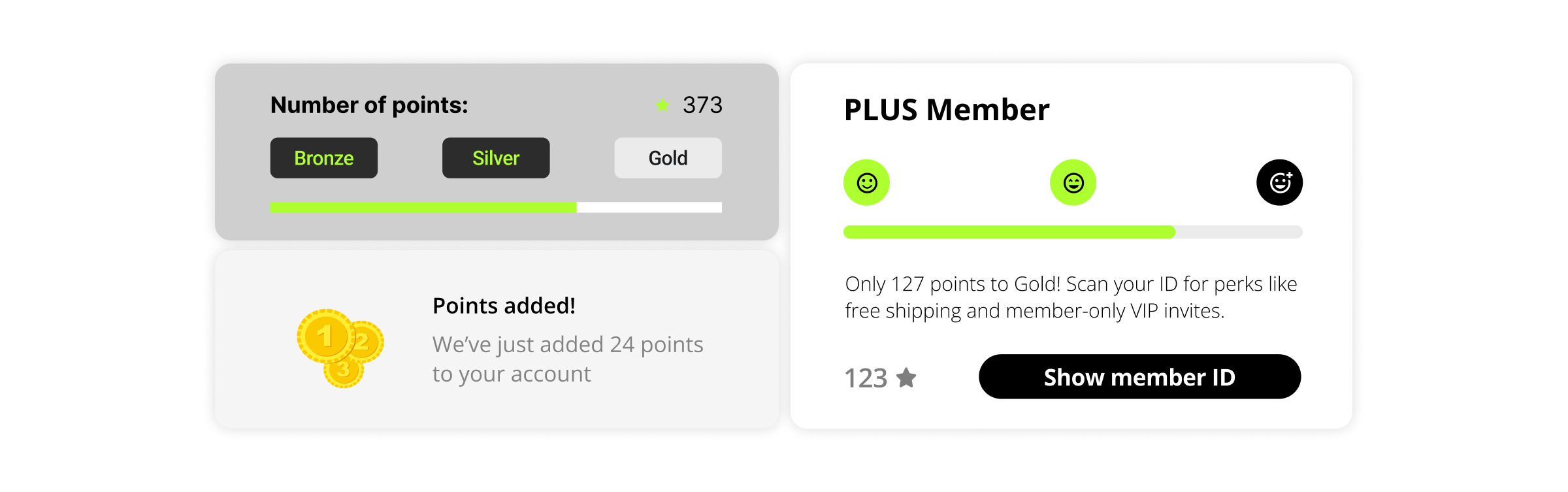
Points are the foundation of customer loyalty programs everywhere, from airlines & hotels to coffee shops & restaurants to ecommerce & retail and more, forming the core of many rewards programs and loyalty ecosystems. Their common role is no accident because points systems leverage aspects of behavioural psychology while providing an easy, flexible way to participate in loyalty programs, track progress, and influence purchase frequency and basket size.
Points are the universal language of loyalty programs because they simplify rewards management and improve customer retention strategy while also supporting stronger redemption rates and overall program performance metrics.
But getting customers to earn those points is only half of the loyalty challenge. It’s only when they burn those points and turn them into rewards that they’ve completed the loop, gained something from their participation and are ready to advance further.
So how can you make sure that loyalty program members reach this important milestone and benefit both themselves and the brand behind the program while maximising ROI and incremental sales impact?
Reactivating Inactive Ecommerce Customers With Loyalty Points
Here’s an example of a simple but very effective way to get customers to move from earn to burn and directly impact sales and increase conversion rates within an Ecommerce loyalty strategy. It’s a great reminder that idle loyalty points should be seen as incremental revenue just waiting to happen and an opportunity to improve overall redemption performance.
UK-based cosmetics brand Escentual wanted to prompt loyalty program members to utilise any points they had earned but not yet burned. The solution came in the form of email outreach with a subtle hint of urgency to provide momentum:

Customers received a series of emails telling them how many points they had earned along with a message that those points would expire in thirty days, then fourteen days, then seven and then finally in twenty-four hours. What better way to speak to the fear of missing out AND the loss of an investment than putting a countdown clock on unspent loyalty points?
The emails were also sent to customers who had not made a purchase for at least 180 days in an attempt to reactivate them using the same message regarding their accumulated loyalty points, supporting a targeted re-engagement campaign within the customer lifecycle.
The results were immediate and unmistakable. Look at this image taken from the campaign results — the huge spike in transactions at the end of October started on the day after the first email about the loyalty points was sent:

The effect lasted for days and another spike came after the next email was sent a week later. It’s clear proof that loyalty program members can be motivated to take action and inactive customers can return when they are informed about a points balance that can be lost.
The benefits of reaching out like this extend well beyond the transactions it generates. It shows clients that you are actively listening and monitoring your loyalty program in a way that works to their advantage. You’re helping them to not only take advantage of the points they have — discounts, free shipping or something else — but to avoid the frustration that comes with the loss of what they’ve accumulated.

The 70/30 Ratio in Loyalty Points Spending
Don’t fall into the trap of thinking that it’s actually a good thing if loyalty program members don’t spend their points because you, as a business, somehow “profit” because you don’t have to give the discounts or free shipping or some other benefit that customers have earned.
Remember that the entire point of your loyalty program is to keep your customers engaged and returning and what says “low engagement” more than low levels of loyalty point spending?
When you have low levels of point spend, it means that program members don’t see the value in belonging to the program because the rewards are not worth their time, the rules are too complex or some other reason. It’s just a matter of time before they are no longer your customers.
Where’s the “profit” there?
Why Emotional Loyalty Drives Long-Term Revenue Growth
Stretch goals, gamification and the smart use of loyalty points have more in common than just being effective ways to deepen customer engagement. They are building blocks for the emotional loyalty that every brand should have as a goal and a foundation for sustainable growth and long-term profitability.
But what is emotional loyalty? Let’s start with what it’s not.
Emotional loyalty isn’t what motivates a customer to shop right now just because something is on sale. It isn’t always stopping by the same coffee shop just because it’s on the way or staying with a certain brand because the cost of switching is too high. It isn’t the kind of loyalty that’s lost if a competitor is ten percent cheaper or offers short-term promotional incentives.
Instead, emotional loyalty is the bond that would cause a genuine sense of loss among customers if they were suddenly unable to interact with a brand for some reason. If you’ve ever missed a certain store or restaurant because you moved to another area where they didn’t exist, you had emotional loyalty. If you’ve ever been genuinely disappointed that a particular brand was somehow no longer available to you, that was because you felt emotional loyalty towards them — a powerful driver of brand preference and competitive defensibility.
That’s the kind of loyalty that every brand should strive for, not the kind that is based on individual transactions motivated by a “buy this & get that” experience or short-term price sensitivity.
When you use stretch goals, gamification or loyalty points in a smart, innovative way that engages customers, you shift the conversation. Instead of a brief, transitory exchange based on an immediate payoff, you create a back-and-forth series of interactions that build towards something bigger and support a stronger customer lifecycle strategy.
This journey helps you learn more about each individual customer and your audience generally. It helps you craft personalised experiences and run experiments at scale. Most importantly, however, moving the conversation to the longer term helps create the space you need to serve, delight, satisfy and impress participants in your loyalty program. It allows you to position your brand as the only source customers need for your products and services and become the default, go-to option when the need arises because why would they think about anyone else?
That’s emotional loyalty.
Get a Free Loyalty Audit
You've just seen the ideas — stretch goals, gamification, smart points strategies. But turning ideas into an actual plan is where most people get stuck. Designing a loyalty program means juggling reward mechanics, engagement triggers, customer lifecycle mapping, and competitor positioning — normally hours of work before you've written a single line of strategy.
That's where a free loyalty audit comes in.
Book a free loyalty consultation and we'll do the analysis for you — reviewing your brand, your customers, and your market to identify exactly where your loyalty strategy can improve. You walk away with clear, tailored recommendations built around your business, not a generic template.
Whether you run a restaurant, an e-commerce store, or a hospitality brand, it's the fastest way to go from ideas to a plan you can actually implement.