Key takeaways
- A loyalty program alone isn't enough — the strategies you deploy with it are what drive engagement, retention, and lifetime value.
- Tiered programs increase spend by motivating customers to unlock higher status and exclusive perks.
- Flexible point redemption gives customers control and caters to diverse preferences, boosting ongoing engagement.
- Personalisation and exclusive experiences build emotional connection and turn loyal customers into brand advocates.
- Gamification transforms routine purchases into interactive experiences that encourage repeat behaviour.
The best retail loyalty program ideas go beyond points-for-purchases: tiered rewards, flexible redemption, personalised offers, exclusive experiences, and gamification are the five strategies that most effectively drive repeat business and customer lifetime value.
Getting customers in the door — physical or virtual — isn't enough to succeed in today's retail environment. True success depends on building lasting relationships that drive repeat business and increase customer lifetime value. No strategy has proven more valuable than a well-crafted loyalty program: it creates engagement, a sense of community, and personalised experiences that keep customers coming back. Rather than shrinking already-thin margins through discounts and price-based promotions, loyalty programs give customers better reasons to shop more often, spend more when they do, and stay loyal for longer.
But having a loyalty program is just the start. How you use it — and the strategies you deploy with it — is the real difference maker. Here's how retailers are boosting sales and customer retention through the creative use of loyalty programs.
What are the best retail loyalty program strategies?
The five most effective retail loyalty strategies are tiered rewards, flexible point redemption, personalised offers, exclusive events, and gamification. Each transforms a basic loyalty program from a simple discount system into an engine for driving sales and lasting relationships.
How do tiered loyalty programs increase spending?
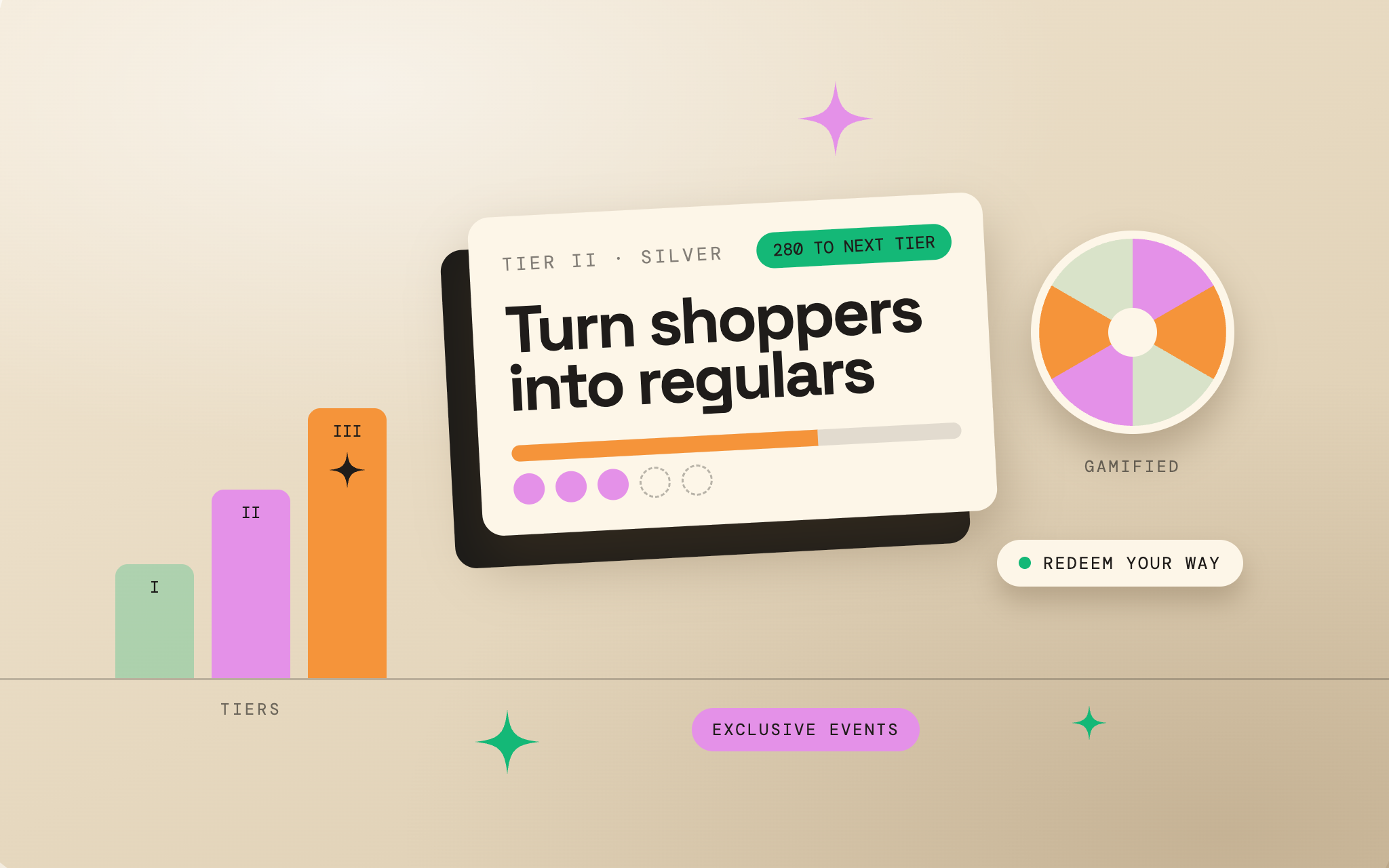
Tiered loyalty programs increase spending by offering progressively better rewards as customers move up through levels. They structure tiers based on accumulated points, spending, or engagement, rewarding higher tiers with exclusive perks like priority service, early access to sales, or personalised discounts. This fosters a sense of achievement and exclusivity that motivates customers to spend more to unlock and maintain higher-tier status — driving retention and revenue.
Why it works
- Aspiration: tiers create a sense of achievement and motivate customers to reach higher levels.
- Increased spend: to reach a higher tier, customers increase purchase frequency and average order value.
- Exclusive benefits: early access, free shipping, or personalised gifts create a sense of exclusivity.
- Data-driven: track progression and offer targeted promotions based on tier and purchasing habits.
How do flexible point redemption systems work?
Point-based systems with flexible redemption let customers accumulate points through purchases and interactions, then redeem them for a range of rewards — discounts, free products, gift cards, or experiences. This flexibility caters to diverse preferences and encourages ongoing engagement, since customers can choose rewards that match their own needs, building a stronger connection and driving repeat business.
Why it works
- Customer choice: flexibility in redemption (discounts, free products, experiences, charitable donations) caters to diverse preferences.
- Increased engagement: gamify the experience with bonus points for specific actions.
- Reduced friction: ensure a seamless, user-friendly redemption process.
- Cross-promotion: allow points to be redeemed across partner brands, expanding the program's value.
Why do personalised offers drive repeat purchases?
Personalised offers and recommendations enhance engagement by tailoring rewards to individual preferences and behaviours. Using data on past purchases, browsing history, and demographics, programs deliver targeted promotions, exclusive discounts on preferred products, and relevant recommendations. This customisation makes customers feel valued and understood, increasing repeat purchases and strengthening brand loyalty.
Why it works
- Relevance: personalised offers resonate more and drive conversions.
- Increased average order value: recommend complementary products or upgrades based on past purchases.
- Improved experience: show customers you understand their individual needs.
- The power of AI: machine learning analyses customer data and automates personalised recommendations at scale.
How do exclusive events build customer loyalty?
Exclusive events and experiences create a sense of belonging that fosters deep emotional connection. By offering access to private sales, behind-the-scenes tours, or events with brand ambassadors, retailers elevate the experience beyond transactional rewards. These memorable moments strengthen brand affinity and turn loyal customers into advocates who promote the brand organically.
Why it works
- Emotional connection: memorable experiences build a deeper bond with the brand.
- Community building: events let customers connect with each other and the brand.
- Increased advocacy: customers share positive experiences with their networks.
- Value beyond discounts: provides value that isn't based on a price reduction.
How does gamification increase engagement?
Gamification injects fun into loyalty programs, turning routine transactions into interactive experiences. Using points, badges, leaderboards, and challenges, it encourages active participation and a sense of accomplishment. Challenges — like completing a number of purchases or trying a new product — give customers clear goals and rewards that motivate more frequent engagement, fostering a competitive spirit and community.
Why it works
- Increased engagement: gamification makes the program more interactive and fun.
- Behavioural change: challenges encourage repeat purchases or trying new products.
- Social sharing: customers share achievements on social media, boosting visibility.
- Track progress: members see how they stack up against others.
By implementing these strategies, retailers can transform their loyalty programs from simple discount systems into powerful engines for driving sales and building lasting customer relationships.
How do you choose the right loyalty strategy for your retail brand?
There's no single best strategy — the right choice depends on your margins, your customers, and what you're trying to fix. Most successful retailers combine two or three rather than relying on one.
- If you want to increase spend per customer, start with tiered loyalty programs — the aspiration to reach the next level lifts frequency and average order value.
- If customers disengage after joining, add gamification — challenges and progress tracking keep them coming back between purchases.
- If your margins are thin, lean on exclusive events and experiences, which build loyalty without discounting.
- If you have rich purchase data, prioritise personalised offers to turn that data into relevant, higher-converting recommendations.
- If your customers value control, flexible point redemption lets them choose rewards that matter to them.
The strongest retail programs layer these together — for example, tiers to drive spend, gamification to sustain engagement, and personalisation to make every reward feel relevant.
Put these retail loyalty strategies to work with TRIFFT
TRIFFT puts all these strategies and more at your fingertips — everything you need in a loyalty program for retail that's easy to deploy, customise, and manage. From tiers and flexible points to gamified challenges and personalised rewards, TRIFFT gives retail brands the tools to turn casual shoppers into loyal regulars.
-p-500_waifu2x_art_noise1_scale.webp)